Research | Outreach| Protect

Summer Lambrecht

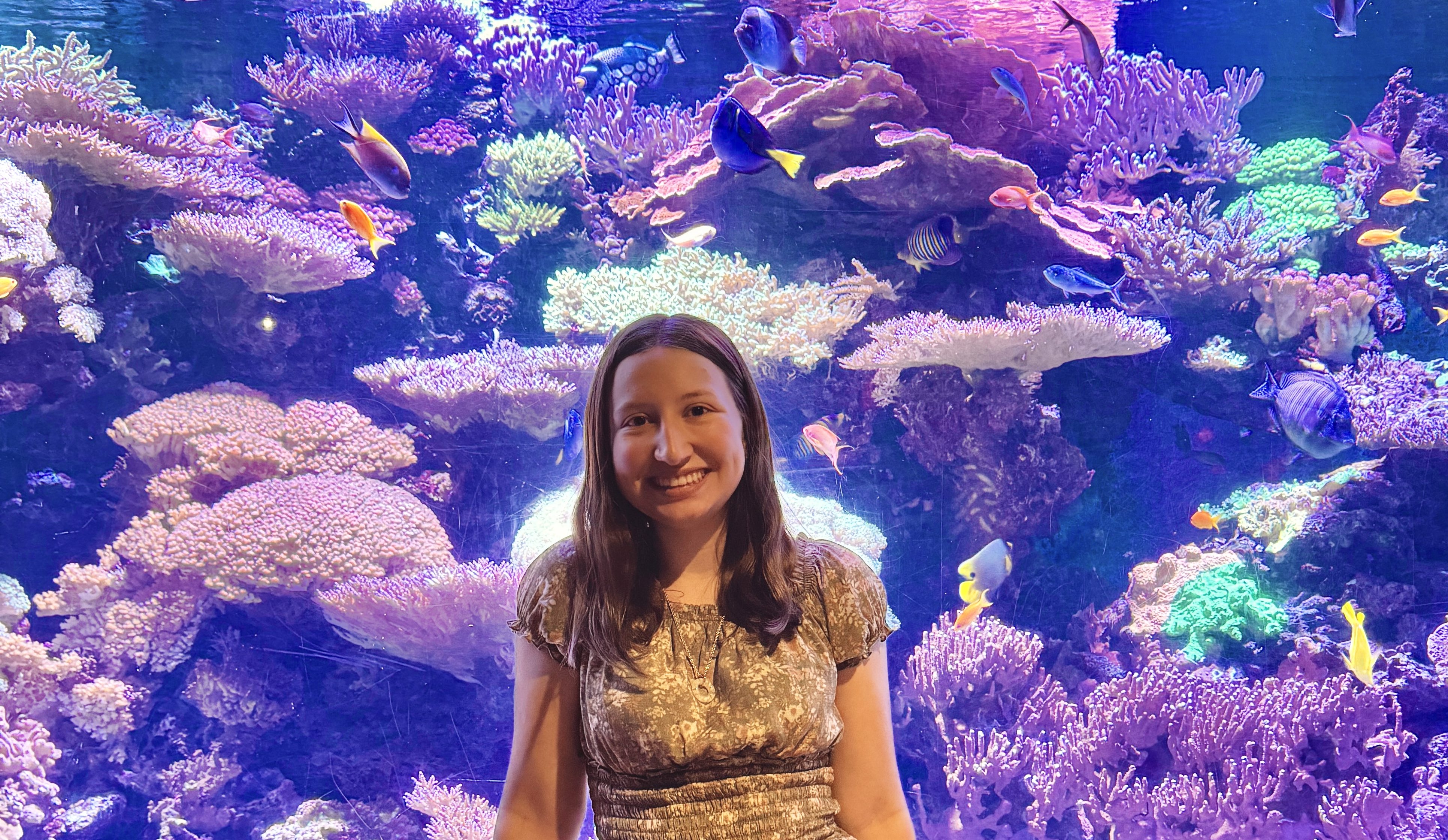
I am a marine conservationist taking my beginning steps into the field of marine biology. As a recent graduate from Stony Brook University with a Bachelor of Science in Marine Vertebrate Biology, as well as a graduate from SUNY Broome Community College with an Associate of Science in Environmental Science, my work focuses on expanding scientific knowledge on marine fauna and improving how humans interact with them and their environment. Throughout my professional and academic career as a student and an environmental education intern for the Atlantic Marine Conservation Society (AMSEAS), there was one thing in particular that stood out to me as a consistent problem for the scientific community; the gap between science and the general public. As more research on marine fauna progresses, many misconceptions of the ocean and its inhabitants remain in the minds of many individuals, preventing meaningful changes to be made to improve the wellbeing of life within our oceans. I seek to change this by bridging this gap as I continue to explore the unknowns about our aquatic friends.
Skills

Leadership

Communication

Problem-Solving

For a team to truly function to its fullest capacity, each individual must express leadership, where they share guidance and support to maintain their direction and alignment with their goals. Leadership has been used as a tool for myself in many aspects. This includes collaborating for projects, leading and speaking with groups of people during public events, and creating response plans with team members. In order for the safe and successful research and conservation on aquatic animals, each participant must be a leader for a collective desired result to be achieved.

In order to protect and conserve marine species, marine conservationists must have the ability to effectively communicate with others. Communication is used in several different ways in the field of marine conservation, for which has been highly valuable for myself. This includes speaking with my peers and directors to ensure projects were handled accordingly, as well as performing public outreach to spread awareness about marine life and the ways at which we can have positive interactions with it. Doing so is important for necessary changes to be made, whether it be changes in human behavior or government.

Accomplishing tasks as efficiently as possible is a skill that one must express both within a team and independently. While protocols are always planned out for handling certain projects and responses, on the spot critical thinking is always required. The unexpected is always expected when studying and handling marine life. So, having the ability to solve problems as they arise, and knowing when assistance from your peers is necessary, is an important skill. Not only does this help minimize safety risks for team members and marine animals, but it also prevents problems accumulating into larger problems.